Pull-Up
Vertical pull, bodyweight, lats
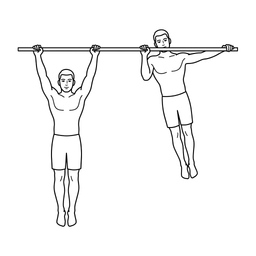
The pull-up lifts your whole body from a hang until the chin clears a bar. It trains the lats, with the biceps, upper back and grip working hard too. It suits anyone with a bar to hang from who wants a strong back, and the easier versions below build up to the first full rep.
Setting up
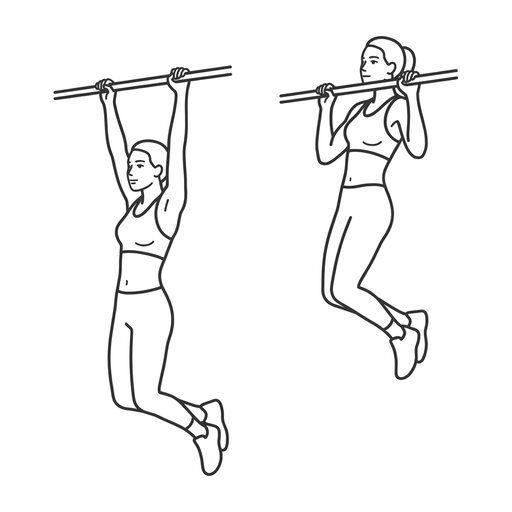
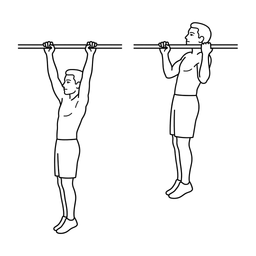
- Grip the bar overhand, hands a little wider than the shoulders.
- Hang with straight arms and the feet off the floor, legs straight or slightly bent and still.
- Before you pull, draw the shoulders down away from the ears.
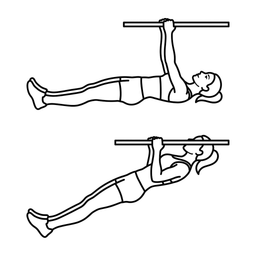
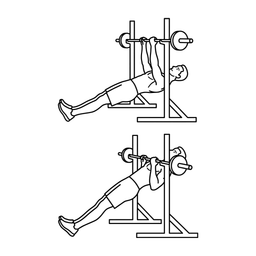
- If a full rep is not there yet, start with one of the easier versions.
How to do a pull-up
- Drive the elbows down toward the ribs and pull the chest toward the bar.
- Lead with the chest, so the body rises in a straight line close to the bar.
- Keep the legs quiet, without kicking or swinging.
- Pull until the chin is over the bar, with the neck long.
- Lower yourself under control all the way to straight arms.
- Between reps, keep a firm grip on the bar and the shoulders set rather than hanging loose.
Breathing. Breathe out as you pull up and breathe in as you lower, keeping the belly tight so the legs stay still.
Muscles worked
- Mainly
- Lats
- Also
- Biceps, upper back and forearms
Common mistakes
- Half reps that never reach a full hang. It skips the hardest part of the move, so lower all the way each time, even if it means fewer reps.
- Kicking or swinging the legs for momentum. Momentum does the work the back should do, so keep the legs still and count only the reps you do cleanly.
- Stretching the neck to get the chin over. It cheats the last part, so pull the chest higher and count the rep only when the chin clears with a long neck.
- Dropping fast on the way down. The way down builds strength too, so take about two seconds to lower.
 Guide
 Guide
 Guide
 Guide
 Guide